


Nature Sunset Summer Non-Slip Carpet Car Floor Mats
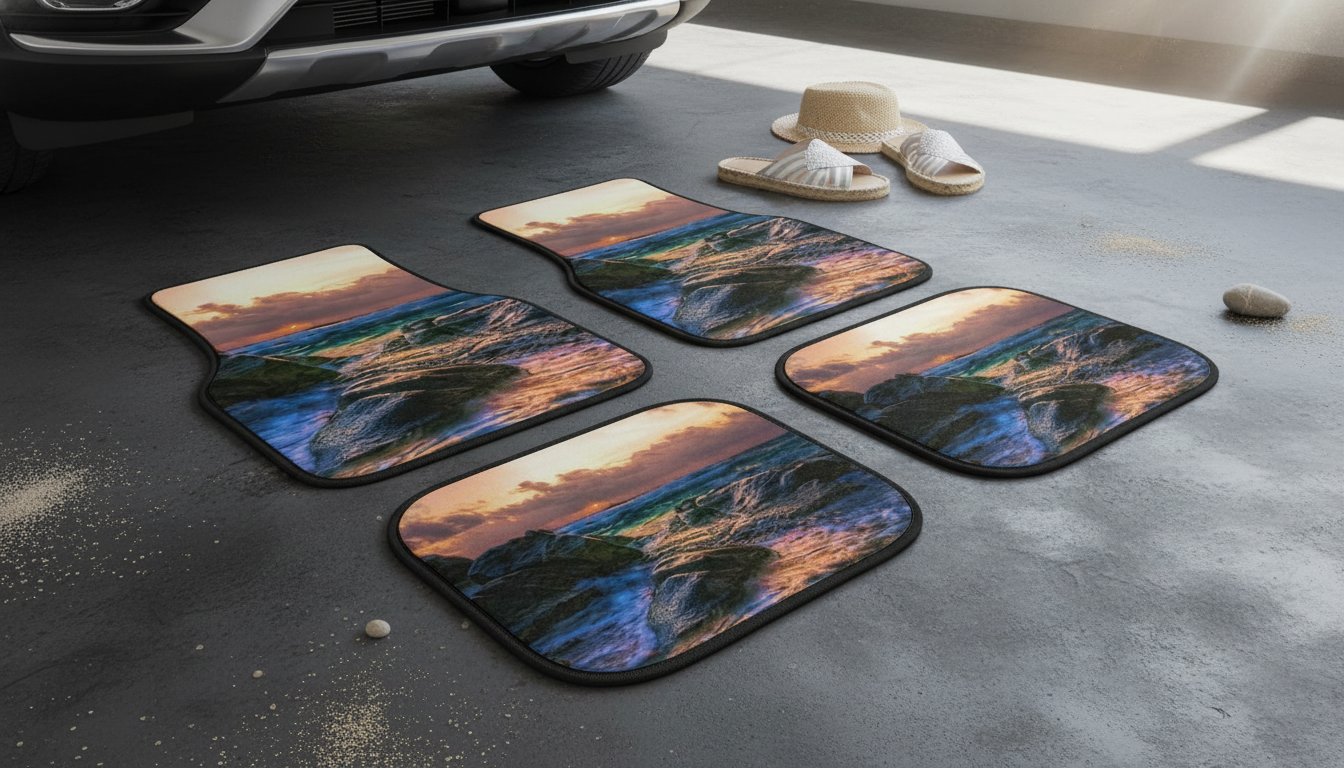
A warm, nature sunset summer theme can make the cabin feel calmer and more personal, but floor mats still have a job to do: take the daily hit from grit, moisture, and constant foot traffic. Carpet-style non-slip mats are a popular middle ground when you want comfort and a vivid printed design without giving up basic protection. Below is what these mats are built for, how they compare with rubber alternatives, what to check for safe fit, and how to keep the print looking sharp over time.
What these mats are designed to do
- Add a nature sunset summer look to the footwells while keeping everyday debris contained.
- Use a carpet-like surface for a softer underfoot feel and reduced interior glare compared with shinier rubbery finishes.
- Rely on a non-slip backing to help reduce shifting during entry/exit and normal pedal use.
- Provide basic protection for factory carpet from dust, sand, and light spills (how well depends on thickness and edge shape).
Carpet vs. rubber: what changes in day-to-day use
Choosing between carpet and rubber isn’t only about appearance—it affects comfort, cleaning, and how the mat behaves in real weather. Carpet-style mats tend to feel quieter and less “industrial” underfoot, which helps a scenic print read clearly. Rubber and all-weather mats usually win when conditions are consistently wet, muddy, or snowy because they’re designed to trap liquids and rinse clean quickly.
| Feature | Carpet non-slip mats | All-weather rubber mats |
|---|---|---|
| Underfoot feel | Softer, more cushioned | Firm, textured |
| Best for | Dry to mixed conditions, everyday debris | Wet/snowy conditions, mud, heavy mess |
| Cleaning routine | Vacuum + spot clean; occasional deeper wash | Rinse, scrub, shake dry |
| Design clarity | High (prints can look vivid) | Medium (texture can break up prints) |
| Moisture handling | Varies; can absorb if not edged/sealed | Typically better at containing liquids |
Non-slip performance is also part material and part fit. A grippy backing can help, but a mat that’s too small (or too large and buckles) can still creep, especially on the driver side where feet pivot in and out.
Fit and safety checks before buying
Fit is not just a preference—it’s a safety item. Floor mats that bunch or slide can interfere with pedals. The NHTSA’s floor mat safety guidance highlights the importance of using mats that don’t impede pedal operation and that are properly secured.
- Confirm the set matches the vehicle type (sedan, SUV, truck) and the general floor shape.
- Ensure the driver-side mat does not interfere with accelerator or brake pedal travel.
- Look for retention support (clips/anchors) if the vehicle uses factory hooks; if not available, prioritize a strong non-slip backing.
- Check edge coverage: higher edges can help contain debris, while flatter edges can be easier to slide in and out for cleaning.
- If the product is advertised as universal fit, measure the approximate footwell area and compare it to the listed dimensions.
Material and non-slip backing: what to look for
- Backing grip without damage: The underside should bite into vehicle carpet enough to resist movement, but not be so aggressive that it tears or chews up fibers over time.
- Carpet density: A denser pile typically vacuums cleaner and resists matting longer than a very fluffy, open pile that traps fine dust.
- Colorfast printing: In sunny climates, UV exposure can slowly fade designs. A higher-quality print and dye process helps keep the sunset gradients from washing out.
- Stitching and edge binding: Reinforced edging reduces fraying and helps the mat keep its outline after repeated cleaning and drying cycles.
How to Choose
When there aren’t obvious “best” options for every vehicle, a quick checklist makes it easier to land on a set that looks right and stays put.
Care and cleaning without damaging the print
Printed carpet mats look best when grit is removed early—fine particles act like sandpaper and can dull both fibers and design. For broader vehicle care routines, the AAA’s vehicle maintenance resources are a useful reference point for keeping interiors and daily-wear items in good condition.
Installation tips for a stable, centered fit
What to expect over time
Before choosing, compare the product details with your daily routine, available space, care needs, and preferred setup. The strongest option is usually the one that fits the intended use clearly and remains simple to clean, store, and check before repeat use.
FAQ
Will non-slip carpet mats move around on the driver side?
They can if the fit is loose or the floor under the mat is dusty. For the best stability, align the mat squarely, use factory retention hooks if your vehicle has them, keep the underside area clean, and confirm full pedal clearance after installation.
How should printed carpet floor mats be cleaned?
Vacuum first to remove grit, then spot clean with mild soap and cool water. Avoid harsh chemicals and high heat, and let the mats fully air-dry before reinstalling to protect both the print and the backing.
Are carpet mats good for rain and snow?
They can handle light moisture, but rubber all-weather mats usually contain liquids better in heavy rain, slush, or snow. In wet climates, seasonal swapping or more frequent cleaning and drying helps prevent odors and staining.













Leave a comment