


Wooden Puzzles for Kids: Early Learning Skills & Safety
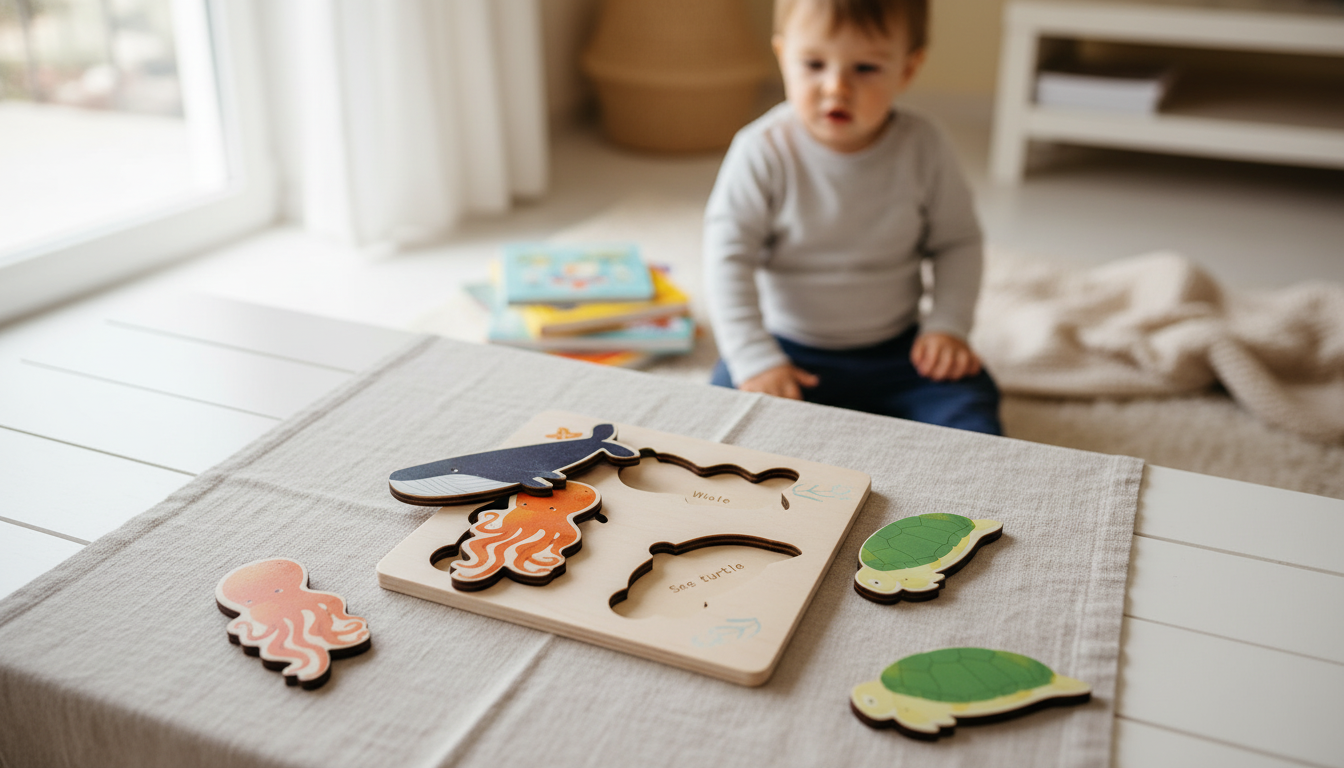
Wooden puzzles turn quiet playtime into hands-on learning. Matching shapes, fitting pieces, and spotting patterns can support early problem-solving, language, and fine-motor control—without screens. This guide covers what skills wooden puzzles can build, how to pick the right type for a child’s age, and how to keep play safe and engaging.
What a Wooden Puzzle Can Help Kids Practice
Even a simple wooden board puzzle can encourage a wide mix of early-learning skills. The key is repetition: each time a child tries, adjusts, and succeeds, their brain gets practice with planning and control.
- Fine-motor strength: Pinching, turning, and placing pieces builds hand and finger control.
- Hand–eye coordination: Aligning edges and tracking shapes supports visual-motor integration.
- Early math thinking: Sorting, sequencing, comparing sizes, and noticing patterns.
- Language growth: Naming colors, animals, vehicles, shapes, and describing where pieces go (in, under, next to).
- Attention and persistence: Trying, adjusting, and finishing a goal-oriented task.
- Confidence: Quick wins from completing a picture or matching set.
For a broader look at typical skill development by age, the CDC’s developmental milestones are a helpful reference: https://www.cdc.gov/ncbddd/actearly/milestones/index.html.
Types of Wooden Puzzles and What Each Is Good For
Wooden puzzles come in a range of formats, and each one emphasizes slightly different skills. Rotating a knob puzzle piece is very different from scanning a busy jigsaw scene for a matching pattern.
- Knob puzzles: Chunky boards with easy-grip knobs for beginners practicing grasp and matching.
- Chunky peg puzzles: Thicker pieces that can stand upright for pretend play and storytelling.
- Shape sorters and geometric boards: Focus on spatial reasoning and basic geometry concepts.
- Jigsaw-style wooden puzzles: Build planning skills and visual discrimination as piece counts rise.
- Layered puzzles: Reveal parts under parts (e.g., body layers, vehicles) and encourage curiosity.
- Alphabet/number puzzles: Support letter/number recognition when paired with spoken practice.
Puzzle type guide by typical age range
| Age range | Good puzzle styles | What to watch for |
|---|---|---|
| 12–24 months | Knob puzzles, chunky shapes, 1–6 large pieces | Large pieces only; avoid small removable parts; smooth edges |
| 2–3 years | Chunky peg puzzles, simple matching boards, 6–12 pieces | Clear pictures; sturdy board; durable finish |
| 3–4 years | Wooden jigsaws, layered puzzles, 12–24 pieces | Not overly tight fits; frustration level stays manageable |
| 4–6 years | More complex jigsaws, scenes, maps, 24–48+ pieces | Piece storage; challenge increases gradually |
How to Choose the Right Wooden Puzzle
The “best” puzzle is the one a child can complete with effort—but without melting down. A few small design details can make a big difference in how motivating (or frustrating) the experience feels.
- Match the challenge to the child’s current skill: Too easy can bore; too hard can discourage.
- Start with fewer, larger pieces: Increase piece count slowly as success becomes consistent.
- Look for high-contrast images and familiar themes: Animals, vehicles, foods, and everyday objects often keep attention longer.
- Prefer smooth, splinter-free construction: Choose well-sanded edges and sturdy boards that don’t warp easily.
- Check paint/finish quality: Even coating, no strong chemical odor, and no flaking.
- Choose a practical size: A tray or frame helps keep pieces contained on a table, couch, or travel mat.
- Consider grip needs: Knobs/pegs help early learners; flatter jigsaw pieces suit older preschoolers who can pinch and rotate.
Safety and Material Checklist
Wood is durable, but safety still depends on piece size, construction, and supervision. For age-appropriate toy guidance, the American Academy of Pediatrics shares clear tips here: https://www.healthychildren.org/English/safety-prevention/at-home/Pages/Toy-Safety.aspx.
- Choking hazards: For younger kids, avoid small pieces; follow the age label and supervise when needed.
- Finish safety: Look for non-toxic labeling and reputable manufacturing details where available.
- Construction: No sharp corners, splinters, loose knobs, or weak glue points.
- Cleaning: Wipe with a slightly damp cloth; avoid soaking wood; dry fully before storing.
- Storage: Keep pieces in a box or bag to prevent pets/siblings from picking up small parts.
If a toy seems unsafe or you want to check recent notices, the U.S. Consumer Product Safety Commission (CPSC) maintains recall and safety information: https://www.cpsc.gov/Recalls.
Simple Play Ideas That Extend Learning
Once a child can complete a puzzle, small tweaks can keep it fresh while building new skills. The goal is to add playful “rules” without taking away the satisfaction of finishing.
- Name-and-find: Call out a color/shape/object and have the child locate and place it.
- Piece talk: Describe piece features (curved edge, corner, straight side) to build vocabulary.
- Sort first: Group pieces by color, category, or edge vs. middle before assembling.
- Story prompts: After completing the puzzle, ask what’s happening in the scene and what comes next.
- Timed teamwork: Do it together and take turns placing pieces to practice patience and cooperation.
- Progression plan: Repeat the same puzzle until it becomes easy, then add a slightly harder one.
When a Puzzle Feels Too Easy or Too Hard
FAQ
What age is a wooden puzzle suitable for?
Many wooden puzzles work well from about 12 months and up, but the best match depends on piece size, thickness, and complexity. For toddlers, stick to large pieces and simple boards, follow the age label, and supervise as needed.
How many pieces should a beginner start with?
For toddlers, start with 1–6 large pieces (often with knobs/pegs), then move up as the child completes it confidently. Young preschoolers commonly do well with 6–12 pieces before graduating to more complex jigsaws.
How should wooden puzzles be cleaned and stored?
Wipe with a slightly damp cloth (a little mild soap is fine when needed), avoid soaking, and let everything dry fully. Store puzzles flat in a dry place, with pieces contained in a box or bag to prevent loss and warping.












Leave a comment