


House Bunk Bed Twin Over Twin: Slide & Guardrail Guide
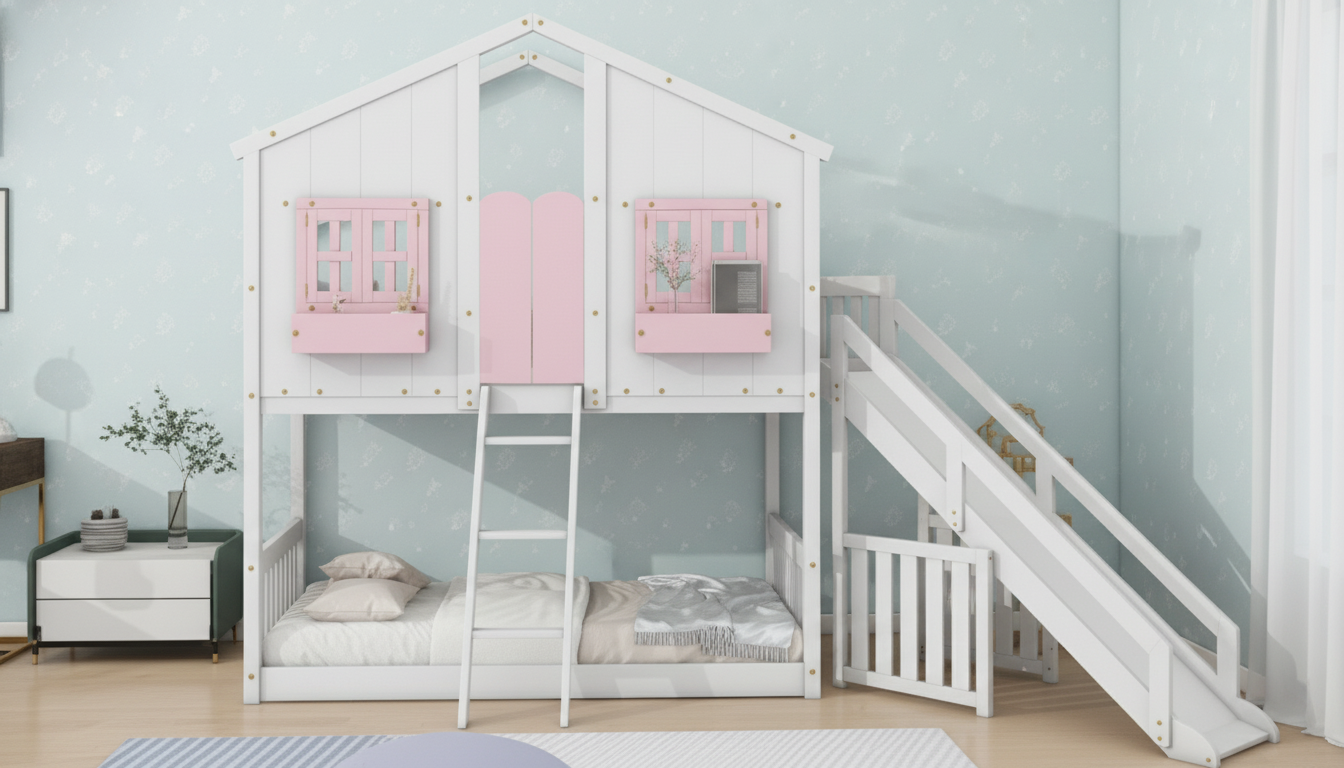
A twin-over-twin house bunk bed brings sleep, play, and storage-friendly design into one footprint. With a roof-and-windows “house” frame, an integrated slide, and full-length safety guardrails, this style is built to feel like a cozy lofted hideaway while staying mindful of everyday safety needs. The result is a kid-focused centerpiece that can help keep floor space open for reading corners, toy bins, and afternoon forts—without turning the room into an obstacle course.
What Makes This House-Style Bunk Bed Different
House bunk beds stand out because they blend a classic twin-over-twin layout with playful architecture and movement features that many kids naturally gravitate toward.
- Twin over twin layout: Sleeps two in the footprint of one bed, which can be especially helpful in shared rooms.
- Roof and window cutouts: The “house” frame acts like built-in decor, creating a themed look without needing extra wall installations.
- Integrated slide: Offers an alternate way down from the top bunk, which can reduce ladder congestion during busy mornings and add a fun routine at bedtime.
- Safety guardrails: Full-length upper-bunk guardrails help reduce fall risk during sleep and everyday climbing.
Key Features to Look For in This Design
Because this bed style encourages both rest and play, details matter. A good-looking frame isn’t enough—focus on the parts that affect stability, access, and day-to-day usability.
- Guardrail height and coverage: Look for continuous guardrails on the upper bunk, including the wall side, so there aren’t large open gaps.
- Stable access plus smart slide positioning: Whether the design uses a ladder or steps, it should feel secure underfoot and not force kids to twist around the slide to climb.
- Slide attachment and landing zone: The slide should lock into place (not wobble), and the bottom should have a smooth run-out area.
- Safe openings in the “house” frame: Window cutouts should be decorative and sized to avoid head or limb entrapment. Avoid designs with overly large or oddly shaped gaps near climbing routes.
- Rounded edges and low-profile hardware: Corners, rails, and ladder rungs get constant contact—smooth shaping and recessed hardware help reduce bumps and snags.
Safety Guardrails, Slide Use, and Everyday Rules
Even a well-built bunk bed depends on consistent household rules. The top bunk is an elevated sleep space, and the slide is still a piece of equipment that needs clear use guidelines.
- Follow age guidance: Common recommendations advise that children under 6 should not sleep on the upper bunk; keep younger kids on the bottom.
- Use the correct mattress thickness: If the mattress is too tall, the guardrail becomes less protective. Skip thick toppers if they reduce rail height above the mattress surface.
- Keep the slide area clear: Remove toys from the landing area and avoid placing bunched rugs under the slide exit. If needed, place a non-slip mat beyond the slide’s end—not under it.
- One rider at a time: Teach kids to sit and slide, not stand, jump, or push off from the top bunk.
- Re-check hardware: Tighten bolts after initial assembly and periodically afterward, especially during the first few weeks when components “settle.”
For broader guidance and updates, review information from the U.S. Consumer Product Safety Commission (CPSC) and bunk bed safety specifications such as ASTM F1427.
Room Fit Planning: Measurements and Layout Checks
A slide bunk bed needs more planning than a standard bunk because the slide extends into the room and changes walking paths. Before ordering, measure both the sleeping zone and the approach/exit routes kids will use every day.
- Ceiling height: Allow comfortable headroom above the top bunk so a child can sit up without hitting the ceiling.
- Slide extension: Leave a clear run-out zone at the bottom—no dressers, toy shelves, or sharp corners nearby.
- Door and window swing paths: Make sure daily traffic won’t collide with the slide or bed frame.
- Delivery and assembly access: Confirm the cartons can navigate hallways, stair turns, and door frames.
- Request missing dimensions: If a listing doesn’t include overall length/width/height and slide projection, get those measurements before purchase.
| What to measure | Why it matters | Practical tip |
|---|---|---|
| Ceiling height | Comfort and safety on the top bunk | Leave enough space to sit up without hitting the ceiling. |
| Slide projection | Walkway clearance and safe landing | Keep the slide exit clear of furniture and sharp corners. |
| Wall clearance | Prevents scuffs and improves stability | Avoid pushing the frame tightly against uneven baseboards. |
| Door/window swing | Avoids daily obstacles | Open doors fully during planning to spot conflicts. |
| Assembly access | Ensures parts can reach the room | Measure stairwell width and landing turns before delivery day. |
Materials, Finish, and Durability Considerations
How to Choose the Right House Bunk Bed for Your Family
Assembly, Placement, and Maintenance
FAQ
What age is appropriate for the top bunk on a twin over twin bunk bed?
Common safety guidance recommends the upper bunk for children ages 6 and older. Always follow the manufacturer’s age and weight limits, and reinforce safe climbing and no horseplay on the top bunk.
How thick should the mattress be on the top bunk when using safety guardrails?
Use a mattress thickness that stays within the manufacturer’s limit so the guardrail remains high enough above the mattress surface. If you add a topper, re-check that the guardrail still provides effective coverage.
Is a slide safer than a ladder for getting down from the top bunk?
A slide can reduce missed-rung slip risks, but it requires a clear landing zone and one-at-a-time rules. Ladders can be safe with good handholds and careful footing, so safety depends on the design, setup, and consistent household rules.













Leave a comment