


Retro Metal Dining Chairs: Sizing, Style & Care Tips
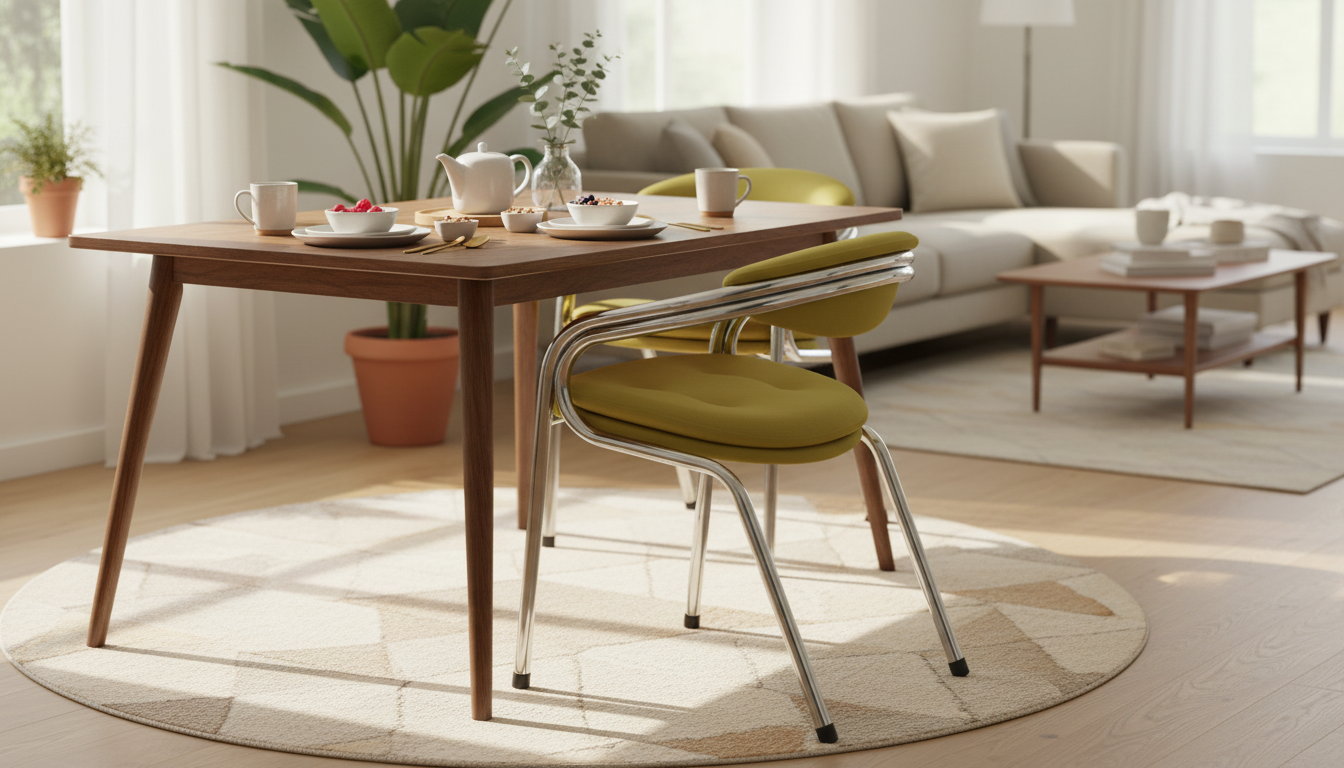
A retro metal dining chair brings a crisp industrial silhouette to kitchens, dining rooms, and café corners while staying practical for daily meals. The appeal is simple: clean geometry, durable finishes, and an unfussy look that plays well with everything from reclaimed wood to polished stone. Below are the defining details to look for, the key measurements to confirm before ordering, styling ideas for different rooms, and care tips that keep metal seating looking sharp over time.
What Makes a Retro Metal Dining Chair Distinct
Retro metal dining chairs borrow their character from mid-century utility seating and workshop-inspired designs. Instead of bulky frames or heavy upholstery, the focus is on structure: a slim steel profile, tidy proportions, and a purposeful “built-to-work” feel that still looks at home in a dining setting.
- Classic cues: slim steel frame, clean lines, and an industrial-leaning silhouette reminiscent of vintage cafés and factory stools.
- Finish options: matte black for modern contrast, brushed metal for a rawer edge, powder-coated color for a playful pop, or lightly distressed paint for a lived-in look.
- Common details: curved backrests, rivet-like accents, tapered legs, and minimal (or no) upholstery for an honest, streamlined profile.
- Why it works at the table: metal chairs feel visually light, wipe down easily, and pair naturally with wood, glass, and stone tops.
At-a-Glance Specs to Confirm Before Ordering
Metal dining chairs can look nearly identical online, but small dimensional differences affect comfort and fit. A few measurements up front help avoid chairs that bump table aprons, feel cramped, or can’t tuck in neatly.
- Seat height and overall height: confirm the seat height matches your table and allows relaxed knee clearance.
- Width and depth: check that chairs can slide under the tabletop and still feel roomy enough for daily use.
- Weight capacity and stability: prioritize reinforced cross-bracing and clean welds at stress points.
- Floor compatibility: foot caps or felt pads help prevent scratches and reduce scraping noise on hardwood and tile.
- Finish durability: powder coating and sealed paint generally resist moisture and minor scratches better than raw or unsealed finishes.
| What to measure | Recommended target | Why it matters |
|---|---|---|
| Seat height | About 17–19 in (43–48 cm) for standard dining tables | Keeps elbows level and legs comfortable |
| Space per chair | About 20–24 in (50–61 cm) of table edge | Prevents bumping shoulders during meals |
| Distance between seat and tabletop | About 10–12 in (25–30 cm) | Helps with posture and knee clearance |
| Clearance behind chair | At least 24 in (61 cm) to walk past | Improves traffic flow in smaller rooms |
If you’re comparing durability claims, it can be helpful to recognize that chair performance testing is formalized in standards used across the furniture industry. For context on how seating is evaluated for stability and strength, see ANSI/BIFMA seating standards information.
How to Choose the Right One for the Room (No-Stock Friendly)
When you can’t test chairs in person, choosing becomes a mix of proportion, finish, and comfort cues. The goal is a chair that looks intentional next to your table and still feels good at the end of a long meal.
- Match visual weight to the table: thin, airy legs often complement chunky wood tops; sturdier frames can visually “anchor” delicate glass or lighter tabletops.
- Pick the finish for real life: for busy homes, powder-coated surfaces tend to be the easiest to wipe clean and the most forgiving of daily scuffs.
- Prioritize comfort signals: look for a gently curved backrest, a slightly contoured seat pan, or compatibility with a simple seat pad.
- Plan for sound control: felt pads or quality glides reduce scraping and keep metal chairs quieter on hard floors.
- Uniform vs. mixed seating: identical chairs read tidy and modern; mixing finishes (like black plus galvanized metal) can feel curated and relaxed.
- Consider storage: if you regularly host, stackable metal chairs can be a practical win—confirm stackability before committing.
Styling Ideas: From Café Corner to Modern Farmhouse
The reason retro metal dining chairs stay popular is flexibility. One chair style can shift moods dramatically depending on table material, textiles, and lighting.
- Industrial loft: pair with a reclaimed wood table, exposed-bulb lighting, and a neutral rug to soften the metal’s crisp edges.
- Modern farmhouse: black metal chairs look sharp with a light oak or painted table; add linen napkins or a textured runner for warmth.
- Retro diner nod: bring in a bold accent color, a simple checkerboard runner, or chrome-like accessories for a playful throwback.
- Small-space dining: choose armless designs that tuck fully under the table and keep décor minimal to maintain an open feel.
- Warm it up: add a leather, canvas, or woven seat pad to balance the chair’s cool geometry with tactile comfort.
For shoppers who care about material longevity and recyclability, steel is widely used across furniture and building for its durability and circular potential. The American Iron and Steel Institute offers background on steel and sustainability.
Care, Maintenance, and Longevity Tips
Metal chairs are typically low-maintenance, but their best look depends on keeping finishes intact—especially around edges, joints, and feet where wear shows first.
Safety and Comfort Checks After Setup
FAQ
Do metal dining chairs scratch hardwood floors?
They can if foot caps are missing, worn, or uneven. Add felt pads or quality glides and replace them once they compress, peel, or pick up grit.
Are retro metal dining chairs comfortable for long dinners?
They can be, especially with a curved backrest and a slightly contoured seat. For extended seating, a thin cushion or seat pad adds comfort without changing the retro look.
How can rust be prevented on painted metal chairs?
Keep the surface dry, wipe spills promptly, and avoid abrasive cleaners that damage the finish. Touch up chips and scratches early so bare metal isn’t exposed to moisture.










Leave a comment