


Kids Walkie Talkies (2-Pack): 3KM Range Tips & Setup
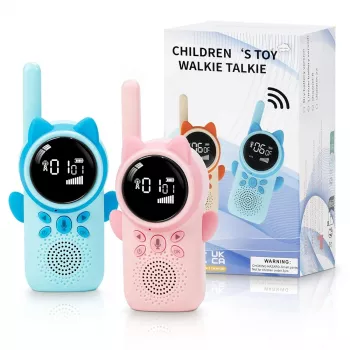
2PC Kids Walkie Talkie Wireless 3KM Radio Transceiver for Outdoor Play
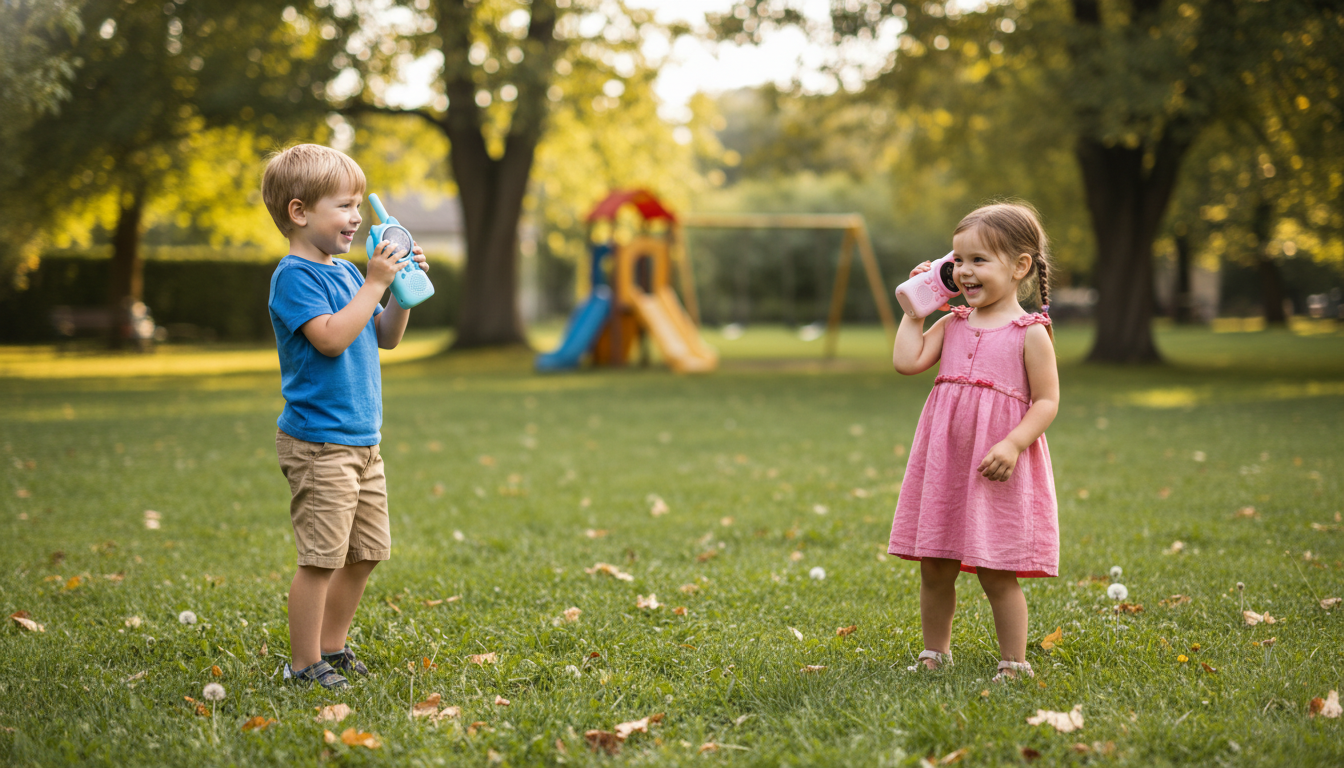
Kids walkie talkies make it easy to stay connected during backyard games, park outings, camping trips, and neighborhood adventures. This 2-piece set is built for simple push-to-talk communication, helping kids coordinate play while giving adults an extra layer of peace of mind when everyone is spread out.
If you’re looking for a screen-free way to encourage teamwork, confidence, and a little healthy independence, the 2PC Kids Walkie Talkie Wireless 3KM Radio Transceiver is a practical pick for everyday play and weekend outings.
What This 2-Pack Is Best For
- Backyard and neighborhood games: hide-and-seek, capture the flag, scavenger hunts
- Family outings: parks, fairs, hiking trails, camping (especially when cell service is spotty)
- Group coordination: siblings in different rooms, kids playing outside while adults are indoors
- Travel and events: keeping in touch in busy places where calling may be inconvenient
A 2-pack is also ideal for “buddy system” play—one radio for each child—without needing an extra device just to get started.
Range Expectations: What “Up to 3KM” Can Really Mean
Walkie talkie range claims are typically measured in open areas with minimal obstacles—think open fields, shorelines, or hilltop-to-hilltop conditions. Real-life use is different: walls, buildings, trees, and uneven terrain can reduce distance significantly.
- Maximum range is usually achieved in wide-open spaces with clear line-of-sight.
- Neighborhoods and indoor use shorten range due to walls, interference, and signal reflections.
- Better positioning helps: stepping outside, avoiding large metal objects, and keeping the antenna area unobstructed can improve reliability.
- The practical goal for kids is consistent communication across a yard, playground, or campsite—not chasing the biggest number on the box.
Typical Communication Scenarios and Expected Performance
| Scenario | What to Expect | Tips to Improve Reliability |
|---|---|---|
| Open park / field | Strongest signal; longest usable distance | Keep line-of-sight when possible; avoid dips/valleys |
| Suburban streets with houses | Moderate distance; occasional dropouts | Move to the end of the driveway or a corner with fewer walls |
| Indoors (multiple rooms/floors) | Shorter distance; more interference | Stay near doorways/stairwells; avoid basements when possible |
| Camping / wooded areas | Varies widely with terrain and trees | Try higher ground; pause before speaking to avoid clipped audio |
Core Features to Look For in Kids Walkie Talkies
When choosing radios for children, the best feature set is the one that keeps communication easy and frustration low—especially during energetic play.
- Simple push-to-talk operation: kids should be able to learn it in minutes and use it without constant help.
- Clear audio at close-to-mid distances: important for fast games where short messages matter.
- Comfortable size and grip: small hands do better with a secure hold and easy-to-reach buttons.
- Channel options (where available): helpful when other families nearby are using similar radios.
- Battery approach: replaceable batteries can be convenient for quick swaps; rechargeable setups can be simpler day-to-day if you have reliable charging on trips.
For general guidance on license-free two-way radio use in the U.S., the FCC’s overview of the Family Radio Service is a useful reference: FCC — Family Radio Service (FRS).
Quick Start: Setting Up for Smoother Conversations
A quick setup routine can prevent the most common “it’s not working!” moments.
- Match settings: power both units on and confirm they’re set to the same channel (and privacy code if supported).
- Test in steps: try a same-room test first, then test outside before kids spread out.
- Practice radio manners: press the button, wait a half-second, speak clearly, then release to listen.
- Use simple call signs: “Base,” “Explorer 1,” “Explorer 2” keeps messages organized during group play.
Safety and Responsible Use
- Communication isn’t supervision: radios help, but they don’t replace adult awareness in public places.
- Keep personal info private: teach kids not to share names, address, school, or travel details over the radio.
- Mind the volume: keep it comfortable and take breaks to avoid listening fatigue.
- Check local rules when traveling: radio services and permitted channels can vary by country; for the UK, see Ofcom — PMR446 information.
Game Ideas That Make the Set More Fun
- Mission cards: send small tasks (“find something red,” “report the best hiding spot”) and confirm completion by radio.
- Neighborhood “delivery route”: one child is dispatcher, the other is the runner with timed check-ins.
- Campsite coordination: set check-in times for kids playing near camp (with clear boundaries and adult approval).
- Treasure hunt clues: one radio stays with the clue-giver while the other guides the searcher toward the next spot.
Care, Storage, and Troubleshooting Basics
Helpful Add-Ons for Trips and Everyday Use
- 100W USB-C to USB-C Fast Charging Cable with PD 3.0 & QC 4.0 – 5A Power for quickly topping off compatible power banks before a day at the park or campsite.
- 66W 5A Fast Charging Spring Retractable USB Type C Cable – For Car & On-the-Go to keep charging neat and tangle-free during road trips.
FAQ
Do kids walkie talkies work through walls and inside the house?
They can work indoors, but walls, floors, and appliances reduce range and can cause dropouts. For best results, test around your home first, keep both units on the same channel/settings, and try standing near doorways or stairwells for a clearer signal.
How far can a 3KM walkie talkie reach in real use?
The “up to 3KM” figure is usually measured in open areas with minimal obstacles. In neighborhoods, woods, or inside buildings, usable distance is often shorter; staying in line-of-sight and moving to higher ground can help improve reliability.
What causes static or interference on walkie talkies?
Static is commonly caused by shared channels with nearby users, obstacles between radios, low batteries, or interference from electronics. Switching channels, moving to a more open spot, and confirming both radios share the same settings typically fixes the issue.












Leave a comment