


HEPA + Activated Carbon Air Purifiers: Buyer’s Guide
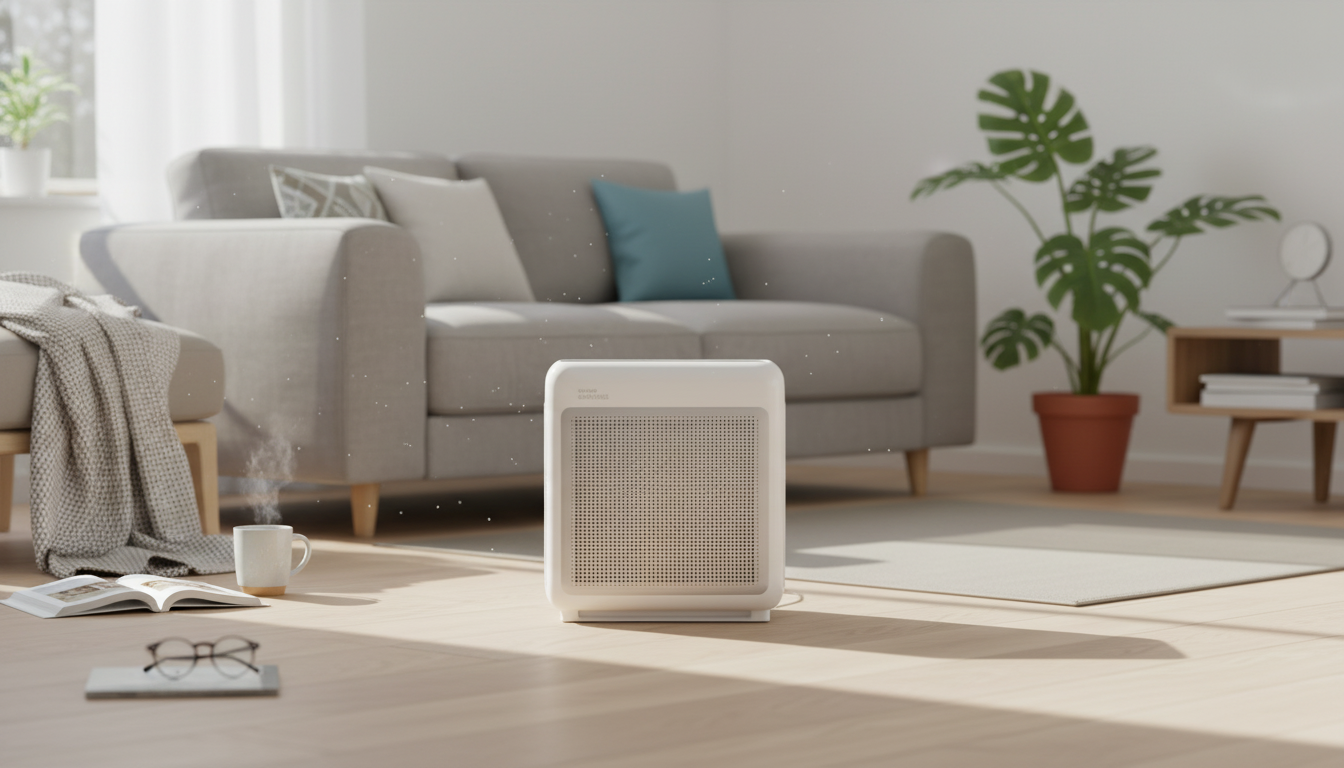
Advanced HEPA & Activated-Carbon Air Purifier
A dual-stage air purifier that pairs a high-efficiency particle filter with activated carbon can help reduce common indoor irritants like dust, pollen, smoke particles, and lingering odors. This guide explains what the filtration stages do, what to look for before buying, and how to use and maintain a unit for consistent day-to-day results.
What This Purifier Is Designed to Do
- Targets airborne particles that affect comfort and cleanliness, such as dust, pollen, and fine particulate matter.
- Uses activated carbon to help reduce odors and certain gaseous pollutants from cooking, pets, and smoke.
- Supports cleaner air in frequently used spaces such as bedrooms, living rooms, home offices, and nurseries.
- Best results come from matching the purifier’s capacity to room size and running it consistently rather than occasionally.
Room purifiers work best as part of a practical indoor-air routine: reduce sources when possible (smoke, heavy fragrances, burned cooking), keep airflow paths clear, and size the unit so it can cycle the room air multiple times per hour. For background guidance on home air cleaners, see the U.S. EPA’s guide to air cleaners in the home.
How HEPA Filtration and Activated Carbon Work Together
- HEPA filtration focuses on capturing airborne particles; it is the main stage for dust, pollen, and smoke particles.
- Activated carbon is porous and adsorbs many odor-causing compounds and some gases; it complements HEPA by addressing pollutants that particle filters don’t capture well.
- A pre-filter (if included) can catch larger debris like hair and lint, helping extend the life of the main filters.
- Performance depends on airflow and seal quality: strong airflow with poor sealing can reduce real-world filtration.
| Stage | Helps reduce | Notes |
|---|---|---|
| Pre-filter (if included) | Hair, lint, larger dust | Can protect the HEPA layer; may be washable or replaceable depending on design |
| HEPA (or high-efficiency particle filter) | Fine particles (dust, pollen, smoke particles) | Look for true HEPA claims; keep doors/windows behavior in mind |
| Activated carbon | Odors and some gases/VOCs | More carbon and longer contact time generally improve odor control |
HEPA is typically the “workhorse” for particle cleanup, while carbon is the stage that makes the room feel fresher when odors linger. If odor control is a priority, thickness and mass matter: a thin carbon “dusting” can help briefly, but a more substantial carbon layer or canister usually holds up longer before it becomes saturated.
How to Choose
With no single “best” unit for every home, choosing comes down to matching performance to your space and your main irritants. Start with room size and particle performance, then refine the pick based on odor needs, noise tolerance, and long-term filter costs.
Room coverage and airflow
- Room coverage: choose a unit rated for the room’s square footage; higher clean-air delivery in a smaller room typically improves results.
- CADR (if provided): higher CADR generally means faster particle removal; compare values by pollutant type when available.
CADR (Clean Air Delivery Rate) is a standardized way to compare how quickly a purifier can reduce specific particle types in controlled testing. For a deeper explanation of CADR and certification, reference AHAM’s CADR overview.
Comfort and day-to-day usability
- Noise level: consider a quiet or sleep setting for bedrooms; higher fan speeds clean faster but can be louder.
- Energy use: efficient motors and an auto mode (if available) can lower operating cost when air is already clean.
- Controls and usability: timer, auto mode, filter indicator, child lock, and easy access to filters can improve daily adherence.
Long-term value: filters and replacements
Specifications and Operating Costs to Confirm
| Item to verify | Why it matters | What to look for |
|---|---|---|
| Room size / coverage | Ensures the unit can cycle air often enough | A stated square-footage rating aligned with the intended room |
| CADR or airflow rating | Indicates how quickly particles can be reduced | Comparable CADR numbers or airflow metrics if provided |
| Carbon amount/type | Affects odor and gas adsorption capacity | A dedicated carbon layer or canister; thicker is typically more effective |
| Replacement filter cost | Determines ongoing ownership cost | Filter price and availability; realistic replacement schedule |
| Noise at low speed | Matters most for bedrooms | A quiet/sleep setting with published dB range when available |
How to Choose the Right Setup for Common Situations
On days when outdoor air quality is poor, balancing filtration with smart ventilation matters. When conditions allow, outdoor air exchange can help dilute indoor pollutants; when conditions don’t allow (for example, wildfire smoke), keeping windows closed and filtering indoor air can be the safer choice. For broader indoor-air and ventilation considerations, see the CDC’s ventilation resources.
Placement, Daily Use, and Maintenance
FAQ
Does activated carbon remove smoke smell and cooking odors?
Activated carbon can adsorb many odor-causing compounds and some gases, so it often helps with smoke smell and cooking odors. Results depend heavily on how much carbon the filter contains, how long air contacts the carbon, and whether the odor source is still present; HEPA handles smoke particles while carbon targets odor.
How often do HEPA and carbon filters need to be replaced?
Many purifiers recommend replacing HEPA and carbon filters every 6 to 12 months, but heavy smoke, pets, or high dust can shorten that timeline. Follow the manufacturer’s schedule and consider replacing sooner if odors return quickly or airflow seems reduced, since some filter indicators are time-based rather than true load sensors.
Can an air purifier help with mold problems?
An air purifier can reduce airborne mold spores, which may help with day-to-day air quality. It cannot remove mold growth or fix moisture issues, so addressing leaks, humidity, and affected materials is essential for lasting improvement.












Leave a comment