


20KPa Cordless Vacuum Guide: Removable Battery & Bin
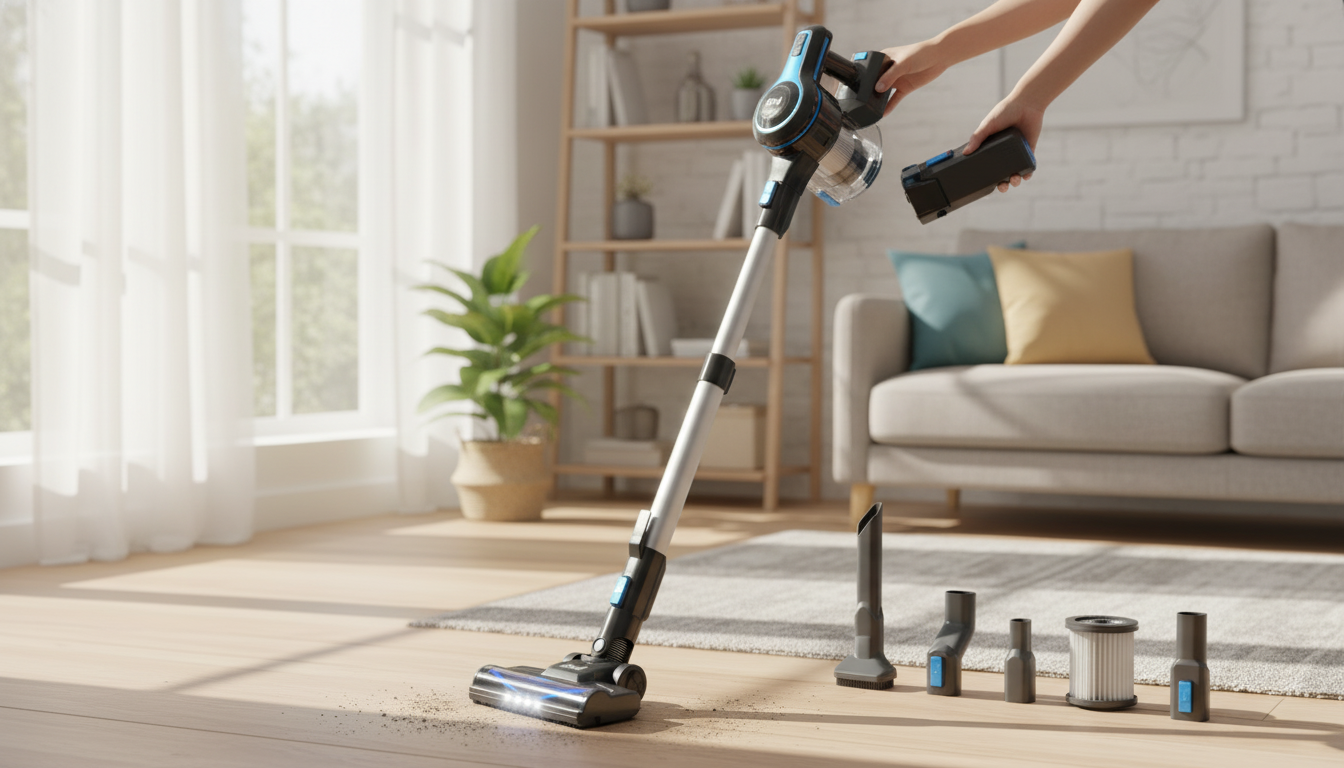
Wireless Vacuum Cleaner with 20KPa Suction, Removable Battery, and Large Dustbin
A cordless vacuum can simplify everyday cleaning when it balances suction, runtime, and easy upkeep. This guide breaks down what 20KPa suction means in practice, why a removable battery matters, how a larger dustbin changes day-to-day use, and which features to prioritize for different homes and floor types.
What 20KPa Suction Power Means for Daily Cleaning
A 20KPa suction rating is commonly a good fit for routine messes on hard floors and low-to-medium pile rugs—think tracked-in dust, crumbs under the table, and everyday pet hair. It’s typically strong enough for quick cleanups without forcing you to drag out a full-size upright.
That said, real-world pickup isn’t determined by a single number. The motor, seals, airflow path, filter resistance, and floor head design all shape how much debris actually makes it into the bin. A well-sealed system with a thoughtfully designed head can outperform a higher suction rating paired with leaky joints or a restrictive filter.
For day-to-day use, power mode strategy matters. Higher power modes are most useful where debris concentrates or where fibers hold onto grit—along baseboards, at entryways, and on rugs. Standard mode is often ideal for open hard-floor areas because it maintains consistent pickup while extending runtime.
Heavier debris like kitty litter or larger cereal pieces can be influenced as much by brush roll agitation and nozzle clearance as by suction. If the intake is too low, it can “snowplow” big bits; if it’s too high without a supportive air channel, it may miss dense debris on textured flooring.
Typical Tasks and Helpful Settings
| Cleaning situation | Recommended approach | Why it helps |
|---|---|---|
| Hard floors (kitchen, hallway) | Standard mode + wide nozzle pass | Preserves battery while maintaining consistent pickup |
| Low-pile rugs | High mode + slower passes | Improves deep pickup and reduces repeated strokes |
| Pet hair on floors | Brush head/roller engaged if available | Agitates hair and lifts it into airflow |
| Corners and baseboards | Crevice tool or narrow nozzle | Concentrates airflow where debris collects |
Removable Battery: Convenience, Lifespan, and Charging Options
A removable battery changes how and where you can charge. Instead of parking the whole vacuum near an outlet, you can bring just the battery to a charging spot—handy in apartments with limited plugs, garages without convenient outlets, or homes where the vacuum is stored in a closet.
If spare battery packs are available, swapping batteries can also reduce interruptions during longer sessions. That’s especially helpful for multi-story homes, big living areas, or cleaning days that include floors, stairs, upholstery, and the car.
Battery longevity often improves with practical habits: avoid running the pack to empty every time, and don’t leave it stored for long periods at extreme charge levels. If the vacuum won’t be used for a while, storing the battery at a moderate charge and in a temperate area can help preserve capacity.
Before buying, check the basics that affect everyday friction: clear LED status indicators, a charger that’s easy to access, and a storage plan that matches your space (wall mount, stand, or simple plug-in). Also consider whether the battery is easy to remove with one hand and whether it locks in securely without wobble.
Large Dustbin Benefits and What to Look For
A larger dustbin reduces how often you stop mid-clean to empty. That matters most in homes with pets, kids, or frequent cooking, where fine debris and hair can fill a small bin faster than expected.
Capacity is only half the story—emptying should be controlled and predictable. Look for a mechanism that opens cleanly over the trash with minimal shaking, since aggressive tapping can create dust clouds and scatter debris back into the air.
Bin construction also affects cleanliness. Smooth internal surfaces can reduce stuck-on debris, while a gasketed fit helps prevent fine dust from leaking at the seams. A well-fitting bin is part of overall airflow sealing, which supports both suction consistency and filtration performance.
Filtration and Allergens: Keeping Fine Dust Contained
For background on indoor particles and why filtration and containment matter, the EPA’s guidance on indoor air quality is a helpful reference: https://www.epa.gov/indoor-air-quality-iaq. For a definition and context around HEPA performance, NIOSH provides an overview here: https://www.cdc.gov/niosh/topics/aircleaning/hepafilters.html.
Ease of Use: Weight, Reach, and Quick Conversions
How to Choose the Right Cordless Vacuum for Your Home
Finally, confirm storage and support. Decide where the vacuum will live (closet, mudroom, laundry area) and whether wall mounting is feasible. Also consider the ongoing basics: replacement filters, replacement batteries, and compatible attachments. Practical energy and usage considerations are summarized by the U.S. Department of Energy here: https://www.energy.gov/energysaver/vacuums.
Care and Maintenance for Consistent Performance
FAQ
Is 20KPa suction enough for carpets and pet hair?
It’s generally effective for low-to-medium pile rugs and routine pet hair, especially when using a brush head and making slower passes. For thicker carpets, you may need more passes or a higher-power model to pull debris from deeper fibers.
What are the advantages of a removable battery on a cordless vacuum?
A removable battery lets you charge off the vacuum, swap in a spare to extend runtime, and replace the pack more easily when capacity declines. It also makes storage and charging more flexible when outlets aren’t near your preferred storage spot.
How often should the dustbin and filters be cleaned?
Empty the dustbin after most uses or whenever it nears the max line. Clean filters based on the manual or every few weeks depending on dust levels and pets, and always let filters dry fully before reinstalling.












Leave a comment